
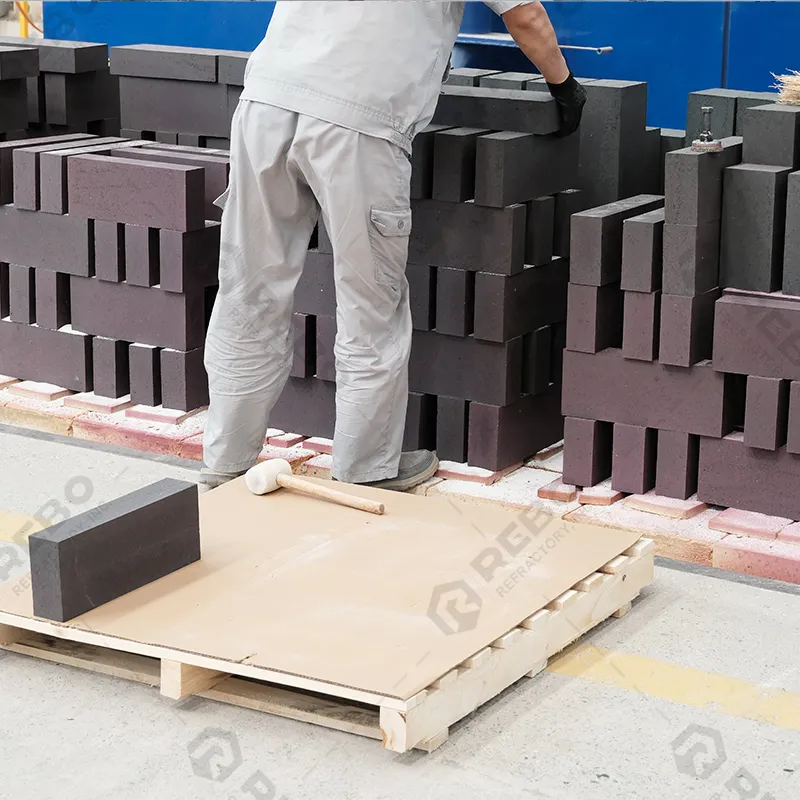
Parameter of Chrome Corundum Brick
| Item | GGZ-30 | GGZ-20 | GGZ-12 | GGZ-5 | |
|---|---|---|---|---|---|
| Cr2O3, % | ≥ | 30 | 20 | 12 | 5 |
| Fe2O3, % | ≤ | 0.3 | 0.3 | 0.3 | 0.3 |
| Al2O3, % | ≥ | 68 | 76 | 80 | 85 |
| Apparent Porosity, % | ≤ | 18 | 18 | 18 | 18 |
| Bulk Density, g/cm3 | ≥ | 3.5 | 3.4 | 3.2 | 3.1 |
| Cold Crushing Strength, MPa | ≥ | 100 | 100 | 100 | 100 |


Types of Chrome Corundum Brick
REBO chrome corundum refractory bricks (chrome alumina fire bricks) are premium refractory materials produced by combining alumina (Al₂O₃) and chromic oxide (Cr₂O₃). They are globally categorized by chemical composition, manufacturing process to suit various high-temperature, high-corrosion industrial applications.
1. Classification by Chemical Composition
2. Classification by Manufacturing Process


Classification by Shape & Geometry
Due to the extreme hardness of chrome corundum (Mohs hardness 9+), all shapes are precision-engineered before delivery to minimize the need for on-site cutting. REBO offers standard bricks, commonly used special shapes, and fully custom designs to meet your specific kiln requirements.
Standard & Regular Shapes of Chrome Corundum Bricks
Straight Bricks: Standard dimensions like T-3 (230*114*65mm) and thickened blocks for flat walls and hearth paving.
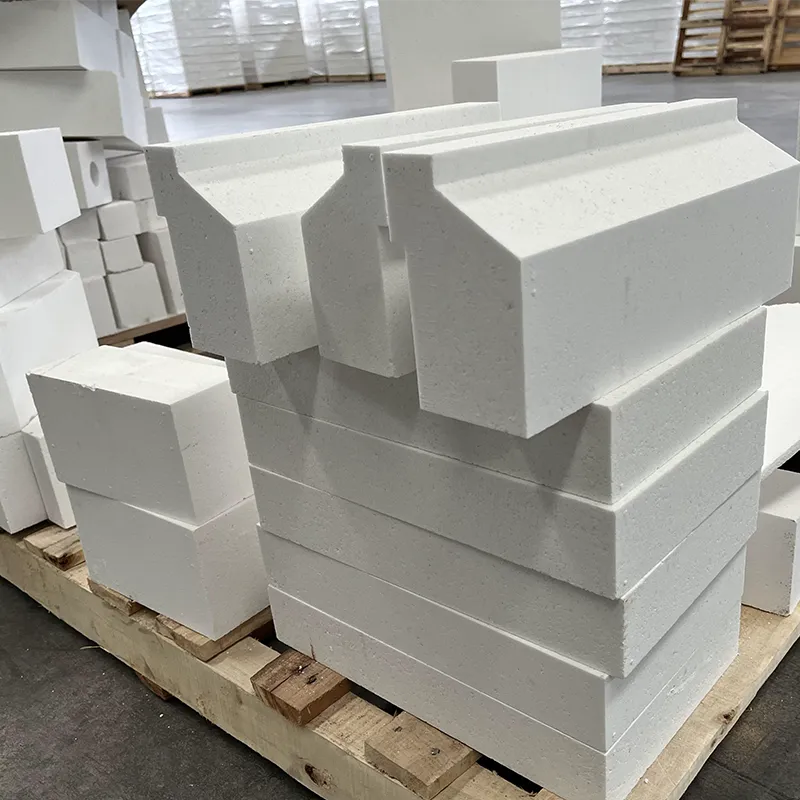
Wedge & Arch Bricks: Vertical wedges, end wedges, and skewbacks used to build cylindrical furnace bodies (gasifiers) and curved roof arches.
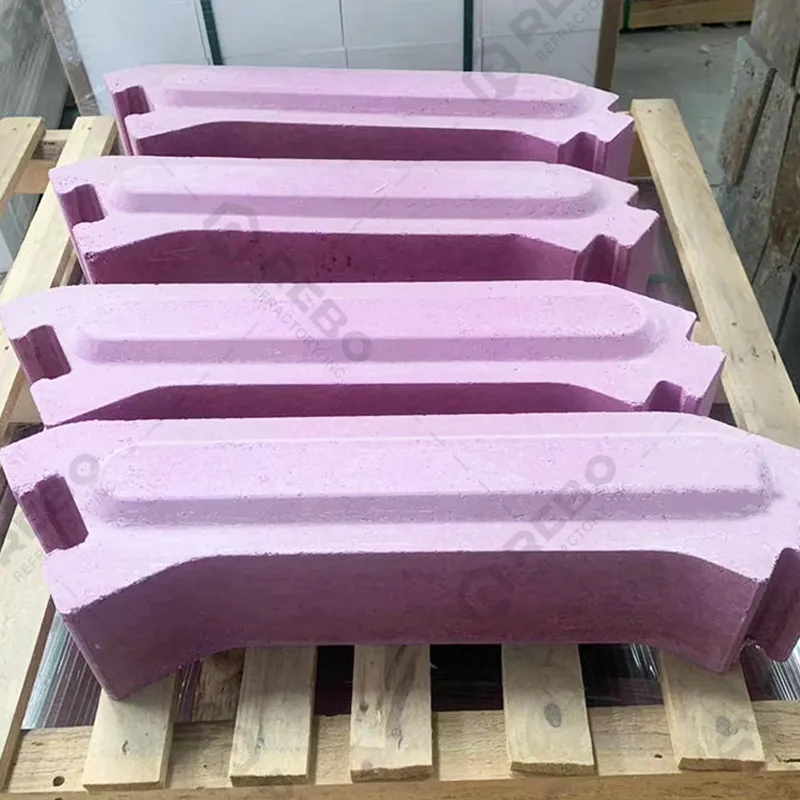
Other Popular Size: Anchor refractory firebrick, octagonal tube/sleeve bricks, checker bricks, throat constriction rings, throat blocks & forehearth channels, gasifier slag tap blocks, burner blocks, tongue & groove bricks, etc.
Custom Fabricated Chrome Corundum Bricks
Precision Diamond-Machined Blocks: Large blocks used in glass furnace throats and slag taps. Six-side precision diamond ground to guarantee joint clearances <0.5mm.
Functional Hole Blocks: Burner/nozzle blocks, electrode blocks, and bubbling blocks featuring custom center holes and bevels built to client CAD drawings.
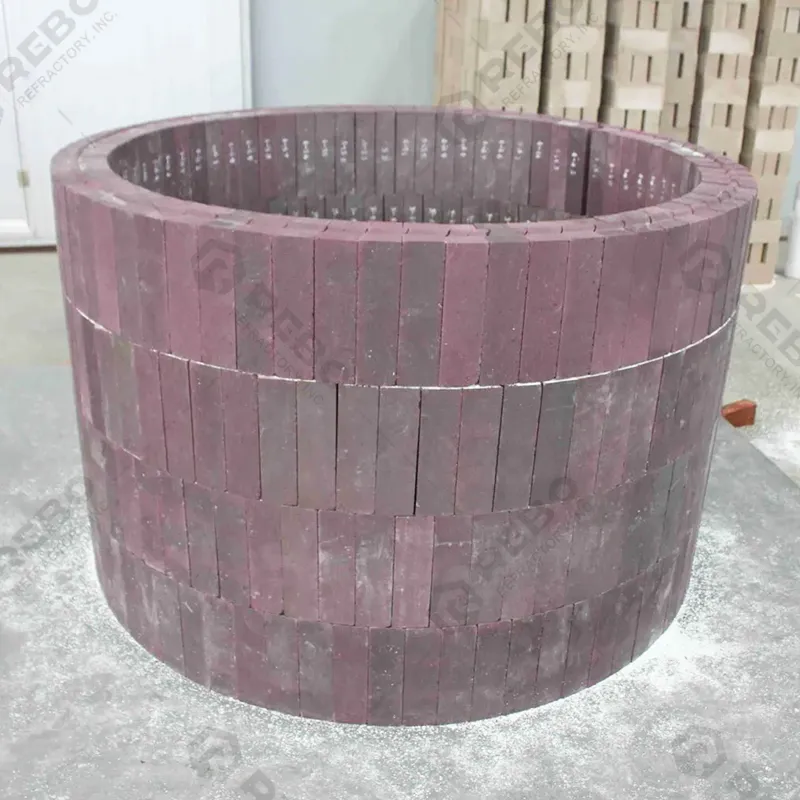
Pre-Assembled Segmented Rings: Multi-piece interlocking ring systems tailored for coal gasifier slag ports.






Global Cases of Chrome Corundum Bricks
Over 50+ industrial projects across the globe rely on our Chrome Corundum Bricks for their most demanding furnace zones. From gasifier slag taps to glass furnace throats, our premium refractory bricks deliver unmatched resistance against slag erosion and thermal wear. Engineered with a precision (Al₂O₃-Al₂O₃) solid-solution matrix, this material has been proven to extend slag tap service life by 30%–50%.


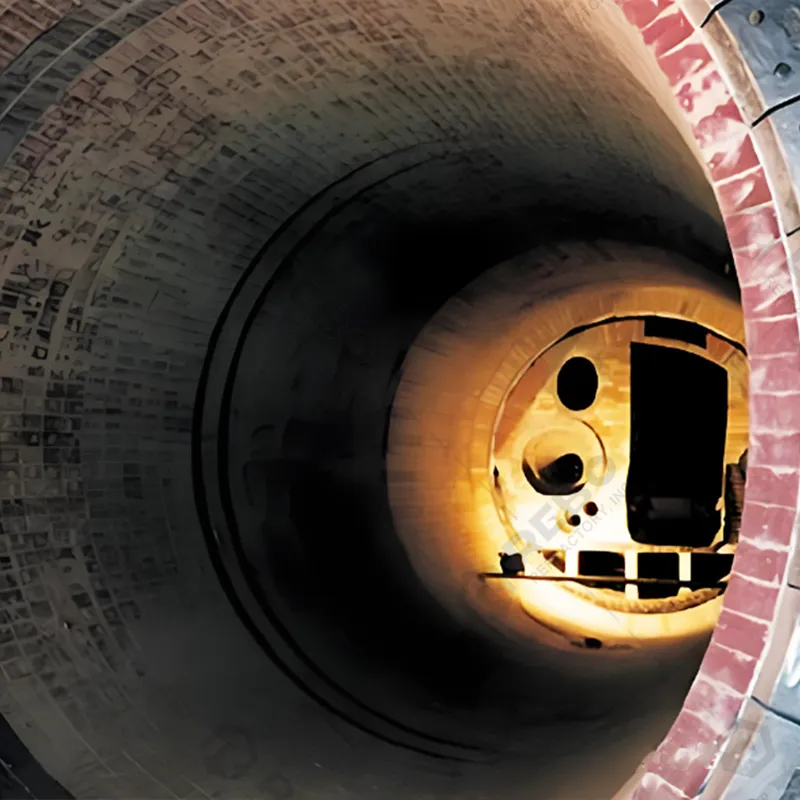
Applications of REBO Chrome Corundum Bricks
| Industry | Critical Application Zones | Primary Wear Factors | Recommended Grade (Cr2O3%) | Common Shapes |
|---|---|---|---|---|
| Glass Manufacturing | Throat blocks, forehearth channels, burner ports, electrode holes | Molten glass flow, batch dust corrosion | High/Medium/Low Chrome (5-60%) or AZCS | Precision diamond-ground blocks, U-channels, custom drilled blocks |
| Coal Chemical | Gasifier slag taps, domes, and cone sections | Coal slag erosion, high-velocity melt flow | High-Chrome (30-90%) | Interlocking ring segments, vertical wedge bricks |
| Waste Incineration | Incinerator slag lines, combustion chambers, burner ports, ash chutes | Acid/alkali fly ash corrosion, slag erosion, thermal shock | Medium-to-High Chrome (15-50%) | Thickened straight bricks, side wedge bricks, burner blocks |
| Oil Refining & Petrochemicals | FCCU regenerator linings, sulfur recovery units (SRU), Claus reactors | High-velocity catalyst particle abrasion, $H_2S$/acid gas corrosion | Low-to-Medium Chrome (5-20%) | Standard straight bricks (T-3), anchor bricks, radius blocks |
| Non-Ferrous Metallurgy | Copper/nickel/zinc smelting slag lines, tap holes | Metal slag penetration, liquid metal erosion | Medium Chrome (15-30%) | Standard straight bricks (T-3), skewback bricks |
| Carbon Black | Reaction furnace throats, combustion chambers | Extreme high-temperature gas flow, thermal shock | Medium-to-Low Chrome (10-20%) | Throat constriction rings, vertical wedge bricks |
| Environmental & Waste | Hazardous waste incinerator slag lines, rotary kiln inlets | Acid/alkali slag corrosion, mechanical wear | Medium-to-High Chrome (15%-50%) | Thickened straight bricks, end wedge bricks |
Chrome Corundum Bricks Color Reveals The Performance
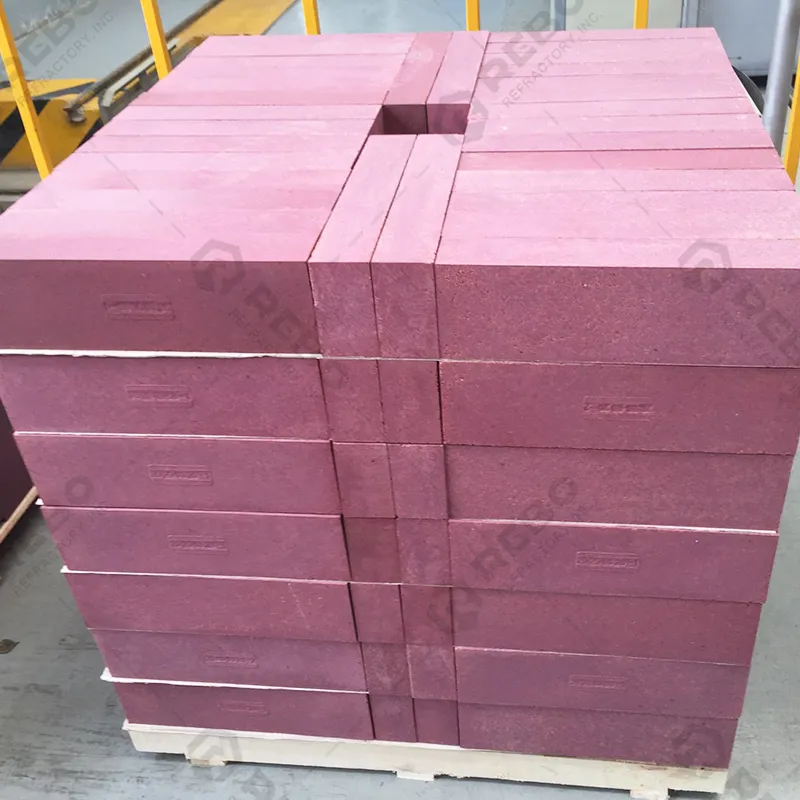
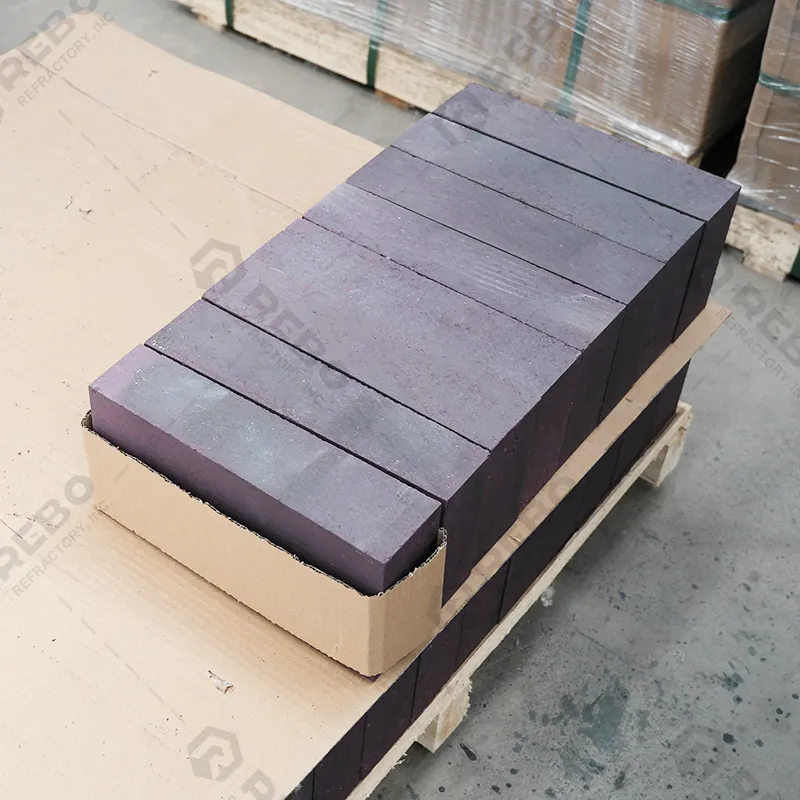
The color of chrome corundum bricks is not just aesthetic it is a direct indicator of their composition and high-temperature capability. During production, these bricks undergo a dramatic chromatic transformation: the unfired body presents a natural green hue, which completely changes after firing at elevated temperatures.
The decisive factor behind both the final color and the material’s resistance to chemical attack is the content of chromium oxide (Cr2O3). If you need further details, please don’t hesitate to contact REBO.
| Grade / State | Color | Mineral Phase | Key Performance Advantage | Main Limitation | Typical Furnace Application |
|---|---|---|---|---|---|
| Unfired | Green State | Unreacted Al₂O₃ + Cr₂O₃ + Binders | Easy to mold, no thermal energy cost in manufacturing | Low mechanical strength; zero resistance to molten slag flow | Raw green brick prior to kiln firing |
| 3% Cr₂O₃ | Light Red | Low-Cr (Al, Cr)₂O₃ solid solution | Maximum thermal shock resistance; withstands rapid temp cycling | Moderate resistance to heavy chemical slag | Burner blocks, reheating furnace skids, ports |
| 8% Cr₂O₃ | Purple-Red | Medium-Cr solid solution | Optimal cost-to-performance ratio; balanced corrosion resistance | Not suitable for extreme, high-velocity slag taps | Carbon black reactors, non-ferrous slag lines |
| ≥ 20% Cr₂O₃ | Dark Blackish-Red | High-Cr dense solid solution | Maximum slag erosion resistance and extreme hardness (Mohs 9+) | Higher susceptibility to thermal spalling; higher material cost | Coal gasifier slag ports, glass furnace throats, incinerators |


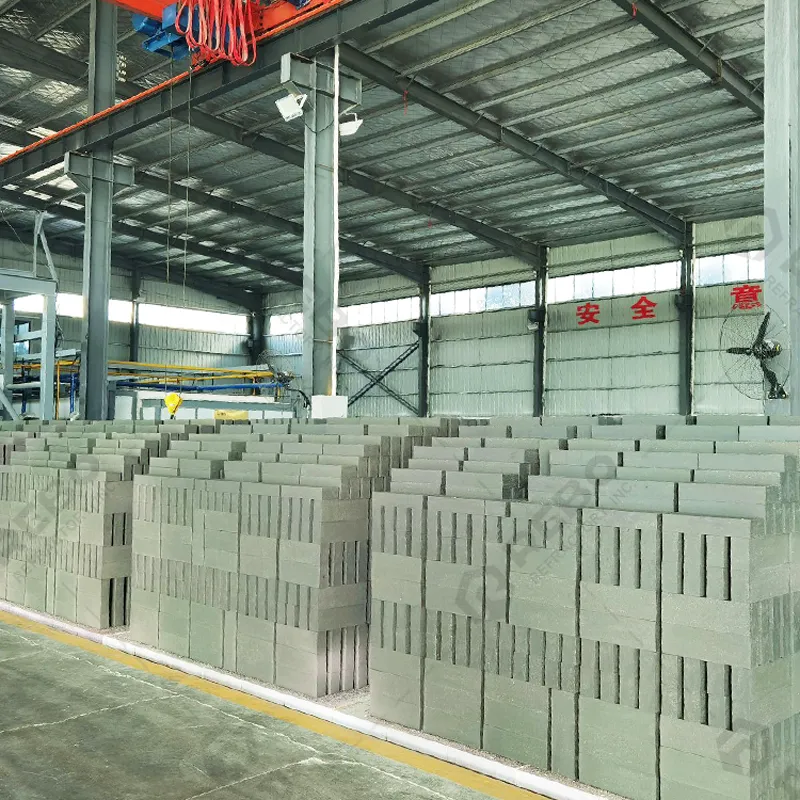
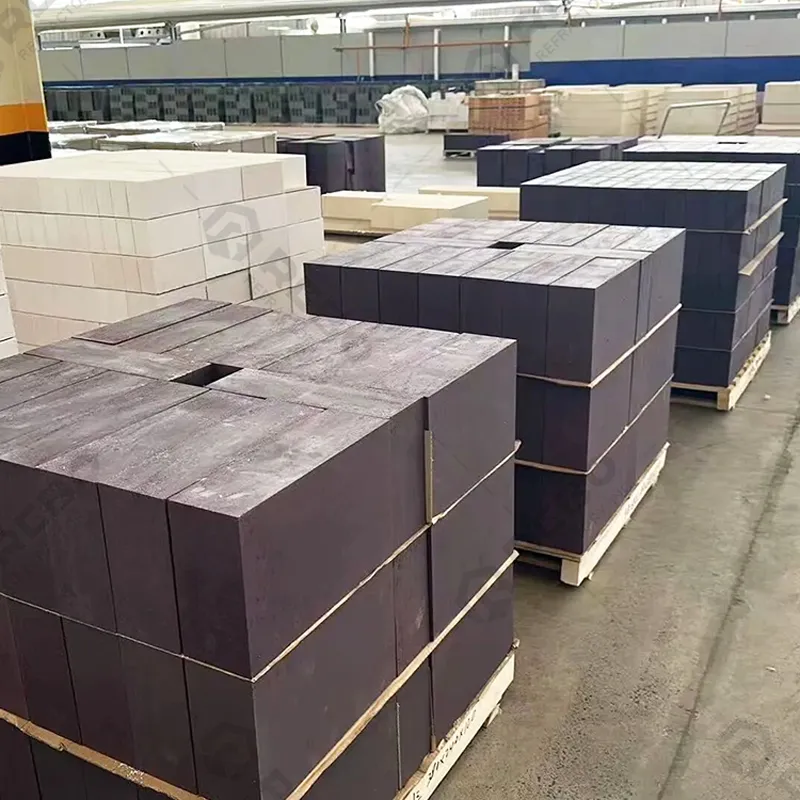
REBO Has Direct Manufacturer Strength
- High-Purity Raw Materials & Smart Batching: REBO uses pure tabular alumina, fused alumina, and high-purity chromium oxide green (Cr₂O≥99%). This eliminates impurities like Fe₂O₃ and SiO₂ from the start. The result is excellent high-temperature corrosion resistance.
- PLC-Controlled Automatic Batching: Our fully enclosed PLC system precisely controls each batch. It ensures even Cr₂O₃ distribution. This eliminates color differences and performance variations in the final product.
- Ultra-High Pressure Forming: REBO uses 600-ton to 1300-ton automatic hydraulic and friction presses. This greatly reduces apparent porosity (to 12–16% or lower). Bulk density reaches 3.1–3.5 g/cm³.
- Complex Shape Pressing: REBO can produce octagonal barrel bricks, special wedge bricks, and large tank wall bricks. Our advanced molds and one-time high-pressure forming prevent internal delamination and cracks.
- Super-High Temperature Kilns: Our automated gas-fired shuttle kilns reach 1750°C. This ensures complete solid-solution reaction between alumina and chromium oxide. The result is a strong (Al,Cr)₂O₃ crystal lattice.
- Precise Atmosphere Control: REBO strictly controls the firing curve and kiln atmosphere. This keeps chromium in its stable Cr³⁺ state for consistent color and crystal growth. The brick structure becomes dense with strong thermal shock resistance.
- CNC Precision Grinding: Large CNC diamond grinding machines surface-finish critical parts like flow hole and slag port bricks. Flatness tolerance is ≤0.5 mm.
- 100% Pre-Assembly Before Shipping: We perform 1:1 full assembly in our workshop based on your CAD drawings. We number every piece and provide assembly photos and videos. This guarantees zero on-site cutting and minimal joints.





Serving Global Customers
In-House Lab Testing & Full Traceability
Full COA Reports for Every Batch: Our lab is equipped with spectrometers, high-temperature reheat change testers, cold/hot compressive strength testers, and porosity testers.
Unique Numbering & Traceability: Every special-shaped brick gets a unique ID. Customers can trace it back to the raw material batch, kiln number, inspector, and assembly code.
Strong Technical Customization
CAD Design Support: REBO’s engineering team works directly with your kiln CAD drawings. We optimize high-wear areas like arch feet, centering rings, and through-hole bricks.
Custom Formulations: We adjust Cr₂O₃ content from 3% to 60% based on your actual operating temperature, slag chemistry, and flow conditions. This gives you the best cost-performance balance.
International Standard Shipping Packaging
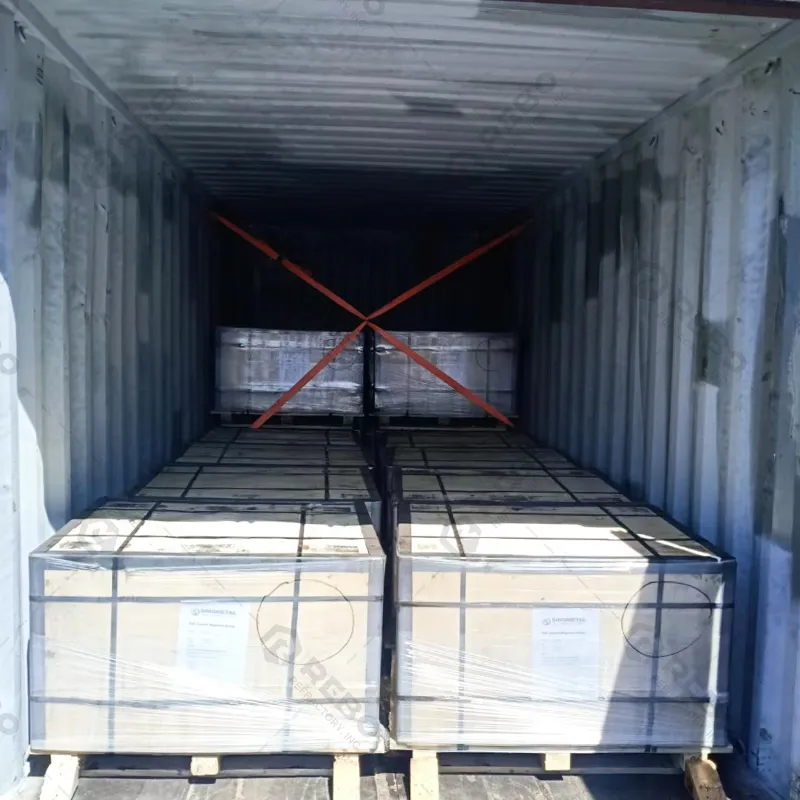
Export-Grade Moisture-Proof Packaging: Each brick is wrapped in anti-moisture plastic film or vacuum-sealed. We add thick wooden edges and high-strength steel strapping. This guarantees zero chipping or breakage during long ocean voyages and multiple handling steps.
Container Loading Solutions: We customize pallet sizes for standard containers. We provide real-time loading photos and videos for your peace of mind.
Global Project Experience & Fast Response
Proven Track Record: REBO has successfully supplied large-scale projects worldwide, including coal gasifiers, glass furnaces, hazardous waste incinerators, and carbon black reactors.
24/7 Technical Support: We respond quickly from initial inquiry and TDS confirmation through production updates to on-site installation guidance.



Chrome Corundum Bricks VS Other Refractory Bricks
| Refractory Brick | Main Composition & Type | Key Features | Primary Applications |
|---|---|---|---|
| Corundum Brick | Main: Al₂O₃ ≥ 90% | Extremely high refractoriness (>1790°C) and high-temperature strength; Excellent volumetric stability and heavy load-bearing capacity; Drawback: Moderate thermal shock resistance; prone to slag penetration. |
Steel reheating furnace skids and hearths; Petrochemical cracking furnaces and ammonia reactors; High-temperature tunnel kilns and load-bearing structures. |
| Chrome Corundum Brick | Main: Al₂O₃ + Cr₂O₃ (Cr₂O₃: 5–60%) | Exceptional resistance to acid/alkali slag erosion; Extreme hardness and high-velocity melt/gas abrasion resistance (Mohs 9+); High crushing strength; effectively prevents liquid penetration. |
Coal Chemical: Gasifier slag taps, domes, and cone sections; Glass Industry: Throat blocks, forehearth channels, and burner blocks; Carbon Black & Waste: Reactor throats and incinerator slag lines. |
| Corundum Mullite Brick | Main: Al₂O₃ (70-85%) + SiO₂ | Superior thermal shock resistance (highly resistant to rapid heating/cooling); Ultra-low creep rate under high loads and elevated temperatures; Drawback: Lower resistance to strong alkaline slag than Chrome Corundum. |
Kiln cars, pillars, and push plates for ceramic firing kilns; Hot blast stove regenerators and domes; Incinerator drying zones and areas with frequent temperature swings. |
| Magnesite Chrome Brick | Main: MgO + Cr₂O₃ (MgO ≥ 55-80%) | High immunity to strongly alkaline slag corrosion; High refractoriness and non-wetting to molten slag; Drawback: Lower mechanical strength/abrasion resistance; hexavalent chromium (Cr⁶⁺) environmental risk. |
Cement Industry: Burning zones of rotary kilns; Steel Metallurgy: Converter furnaces and RH refining ladles; Non-Ferrous: Copper and nickel smelting slag lines. |


FAQs of Chrome Corundum Brick
Q: What is the Difference Between Chrome Corundum Bricks and Standard Corundum Bricks?
Q: Which Cr₂O₃ Percentage Grade Should Customers Choose for Their Furnaces?
Thermal Fluctuations (Burner blocks, heating zone): Choose low-chrome (3−8%).
Moderate Slag Erosion (Carbon black, non-ferrous slag line): Choose medium-chrome (10−20%).
Severe Melt Flow & Slag (Gasifier slag taps, glass furnace throats): Choose high-chrome (≥30%).
Q: How Do You Prevent Joint Gaps and Slag Leakage During Site Installation?
Q: Are These Bricks Suitable for Thermal Shock Conditions With Frequent Temperature Changes?
Q: How Do You Pack Heavy Chrome Corundum Bricks to Prevent Edge Chipping During Sea Freight?
Q: What Technical Data or Documents Does REBO Provide Before Order Placement?
Complete Technical Data Sheet (TDS) matching your required grade.
Third-party Certificate of Analysis (COA) (chemical composition & crushing strength).
3D/CAD drawing verification and pre-assembly photos/videos.