
Parameters of Fire Clay Insulation Brick
| Item/Grade | Symbol / Condition | NG135-1.3 | NG135-1.2 | NG130-1.0 | NG125-0.8 | NG120-0.6 |
|---|---|---|---|---|---|---|
| Bulk Density, g/cm³ | ≤ | 1.3 | 1.2 | 1 | 0.8 | 0.6 |
| Cold Crushing Strength, MPa | ≥ | 5 | 4.5 | 3.5 | 2.5 | 1.3 |
| Cold Crushing Strength, MPa | / | 4.5 | 4 | 3 | 2 | 1 |
| Permanent Linear Change, % | Experimental Conditions | 1350°C*12h | 1300°C*12h | 1250°C*12h | 1200°C*12h | |
| Permanent Linear Change, % | Xmin~Xmax | -2~1 | -2~1 | |||
| Thermal Conductivity Coefficient, W/(m·K) ≤ Average Temperature (350±25°C) | ≤ | 0.55 | 0.5 | 0.4 | 0.35 | 0.25 |
Standard Size of Clay Insulation Brick
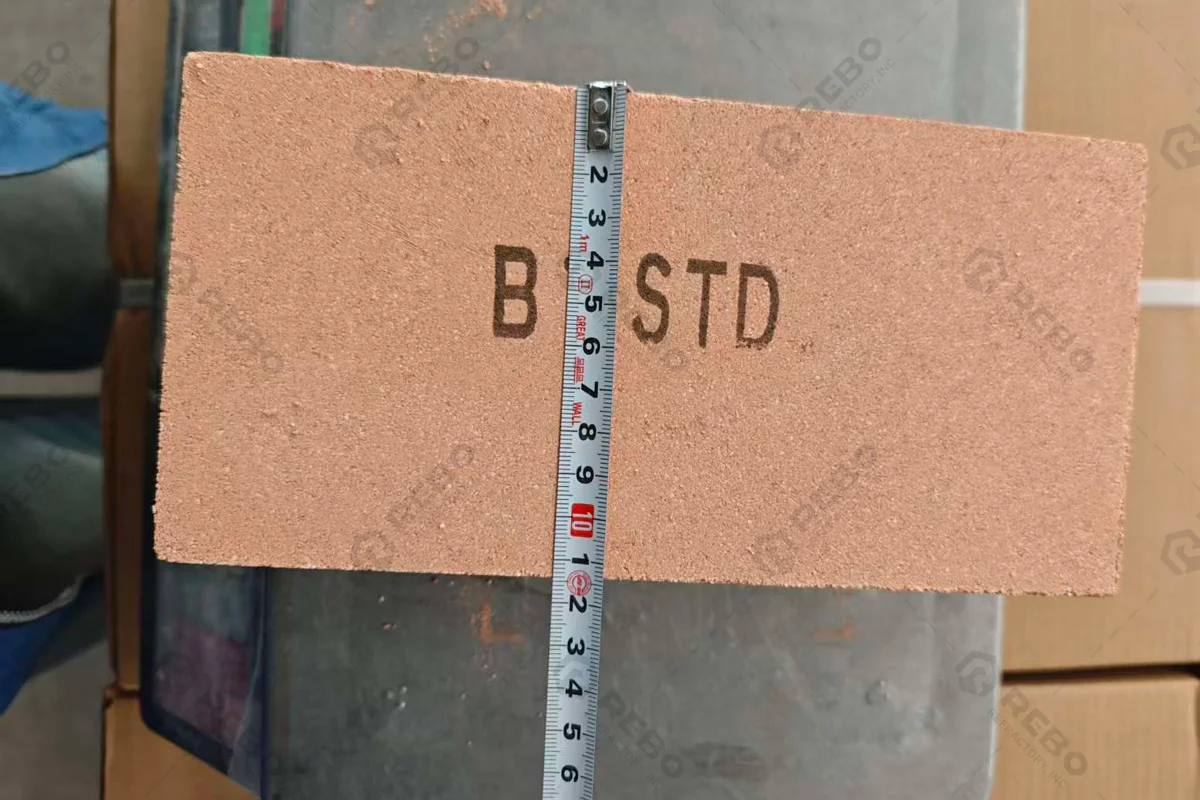
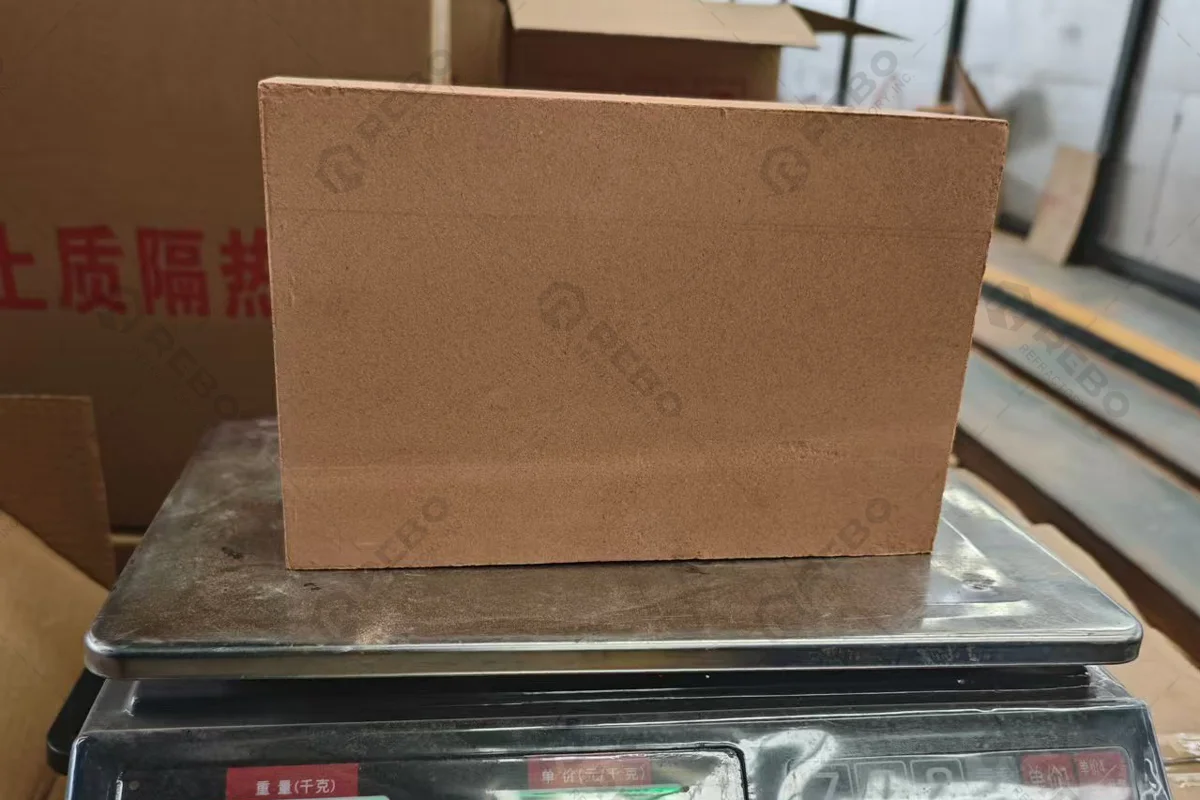
The standard size 230x114x65 mm (9×4.5×2.5 inch) is a standard inventory at REBO factory. If the type you need happens to be in stock, the delivery cycle will be short. Standard size of insulation brick is suitable for projects with tight deadlines. Furthermore, standard size lightweight fireclay bricks are internationally recognized, so construction efficiency will be higher.
Custom Size and Shape of Fireclay Insulation Brick
REBO has over 20 years of experience in custom-made fire clay bricks. For example, we have exported insulation bricks for vaults, furnace doors, burner holes, corners, curved furnace walls, and many other complex components. Using custom-made insulating bricks improves overall sealing and insulation. Furthermore, the overall stress distribution is more rational, effectively extending the kiln’s lifespan.




Reasons to Use Fire Clay Insulation Bricks for Your Kiln
- Energy Saving and Consumption Reduction: Reduces the temperature of the furnace outer wall, decreases heat loss and improves thermal efficiency;
- Reduced Furnace Weight: Lightweight characteristics of fireclay and mullite insulation bricks facilitate furnace structural design and construction;
- Easy Construction: You can saw and cut the insulation bricks, facilitating the construction of irregularly shaped parts;
- High Cost-Effectiveness: Lower cost compared to high-alumina and mullite insulating bricks, suitable for medium and low temperature operating conditions.


Porjects about REBO Fire Clay Insulation Bricks
South Korean B1 Standard Clay Insulation Bricks
This South Korean customer is a long-term partner of REBO and has repeatedly placed repeat orders for refractory bricks and ceramic fiber insulation products. This time, they purchased standard-sized B1 clay insulation bricks for a local steel kiln insulation project. The customer expressed high satisfaction with the quality of REBO refractory products and professional service.
Turkey Custom-Sized Clay Insulation Bricks
Recently, a Turkish customer purchased custom-thickness clay insulation bricks (230x114x40mm) to fit the kiln structure for a cement kiln renovation project. REBO’s internal departments conducted rigorous inspections of all clay bricks to ensure dimensional accuracy and physical and chemical properties. The Turkish customer expressed great satisfaction with the quality of REBO’s exported insulation bricks.
Italy Clay Insulation Bricks
This Italian customer is a local refractory and insulation materials company that has maintained a stable cooperative relationship with REBO for many years. This year, the Italian customer placed another order for a batch of custom-made clay insulation bricks. Thanks to its highly competitive price-performance ratio in the European market, more and more customers are using REBO products. Customers are also gradually shifting their focus from European suppliers to long-term partnerships with REBO.






Fire Clay Insulating Brick Factory
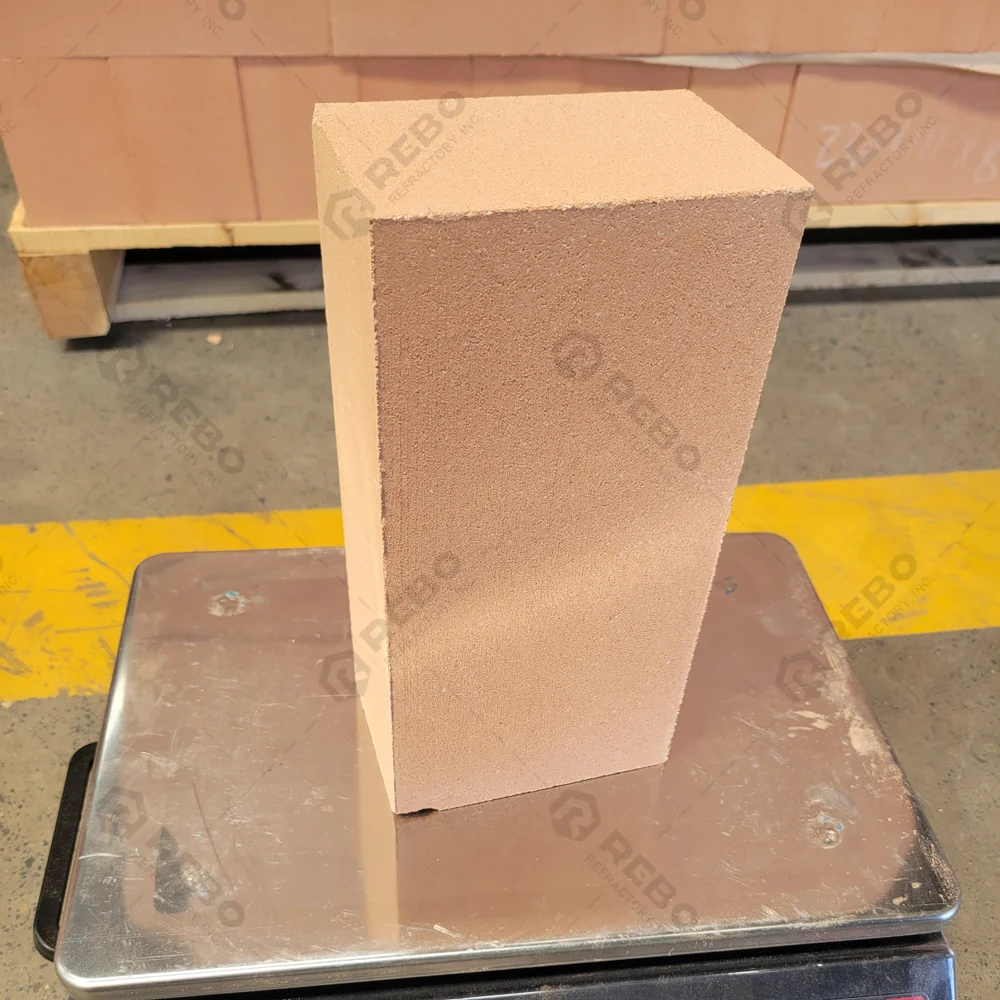
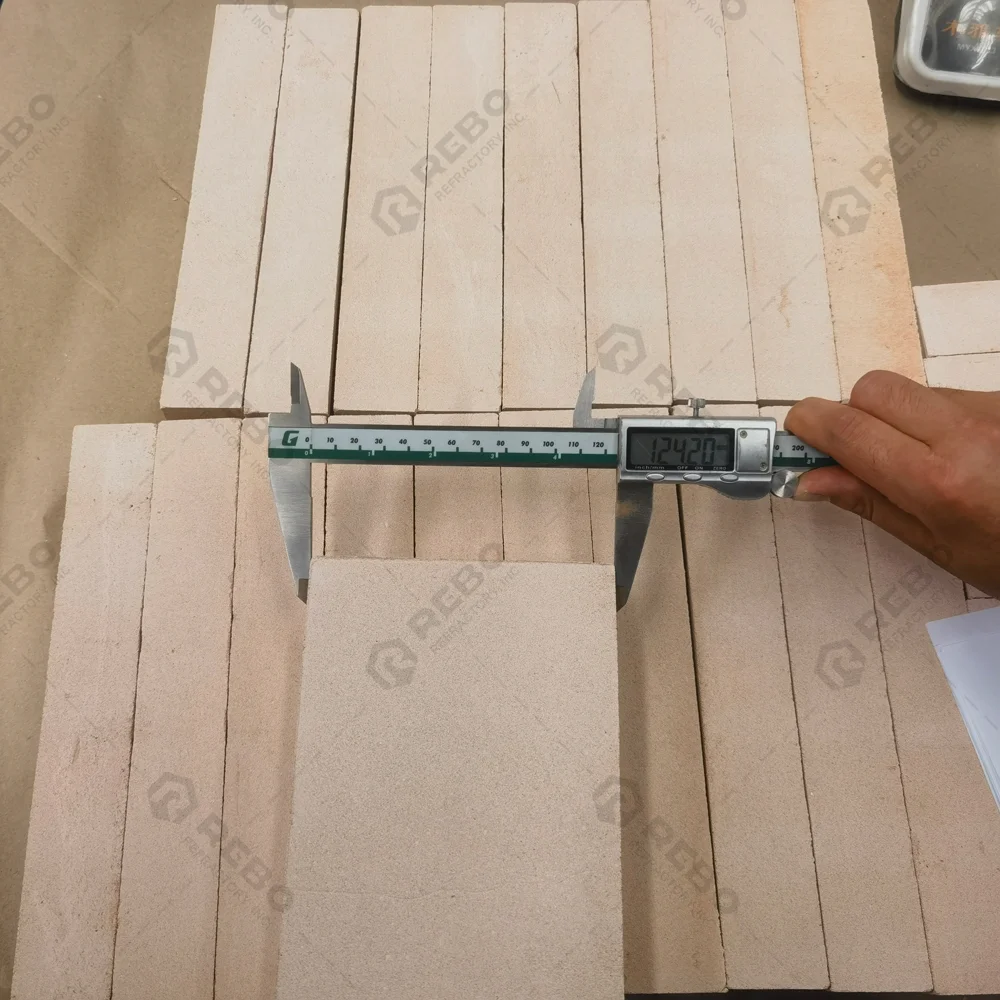
Established in 2004, the factory is located in Xinmi City, Henan Province—China’s largest refractory materials industrial zone. REBO has accumulated decades of refractory materials and ceramic fiber product production technology, coupled with large-scale industrial and technical facilities, which enables it to offer highly competitive prices to international customers. More importantly, unlike typical refractory material factories, Henan REBO Composite Materials Co., Ltd. calibrates our services according to the expectations and project requirements of overseas customerts.
REBO’s international service model aims to address two major pain points commonly faced by foreign buyers when working with China refractory suppliers:
Rapid Communication Response
A professional export service team, rapid quotation response, and clear technical support within the client’s working hours/time zone.
Professional Technical Support
Assistance with brick grade selection, customized sizes (including thin/non-standard sizes for space-constrained furnace linings), and application-specific advice.
Reliable Logistics
Export experience across multiple regions, supporting standard shipping documents, container loading optimization and delivery tracking. Catch the latest delivery news in REBO LinkedIn<
Product Advantages
Mature tunnel kiln firing technology, stable dimensional tolerances. Reliable thermal insulation performance (low thermal conductivity, high porosity) reduces energy loss and fuel consumption in industrial furnaces and kilns.